▼ARTGUIDE
00:00
Burrania girls
Albuquerque Museum
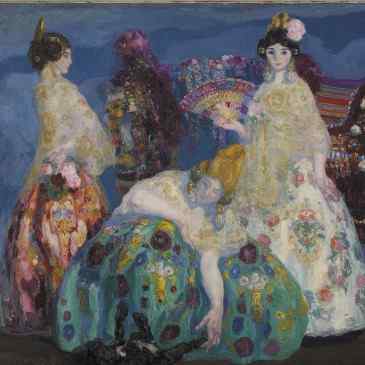
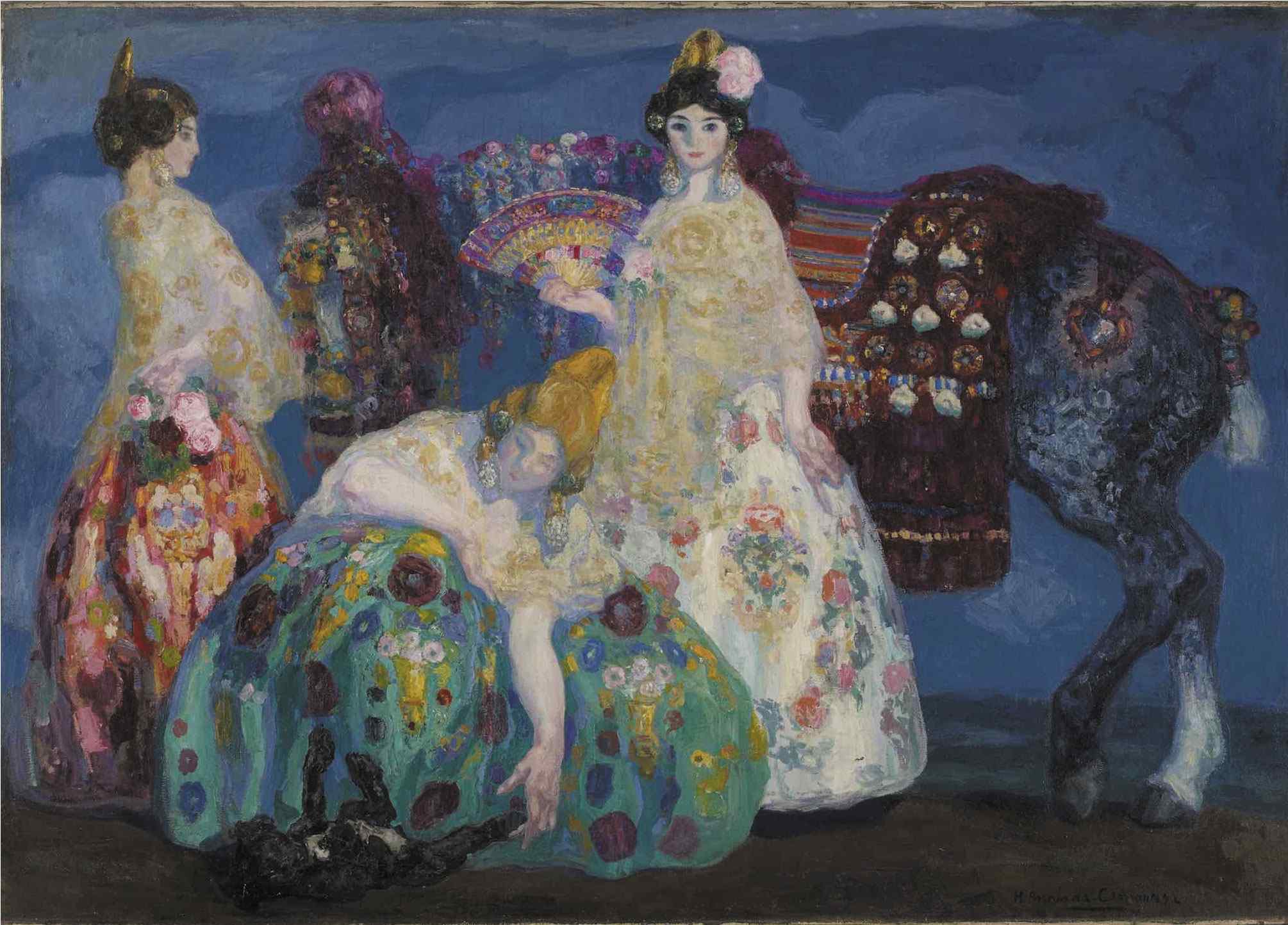
1910 - 1911
Hermen Anglada Camarasa was born in 1871. His father, a commercial artist, was his first teacher. In Paris, Anglada absorbed the influences of symbolism, modernism and fauvism.
After a few visits to Valencia, he situated himself in the traditions of this place. This work portrays three young women from the orange groves in Burriana and their richly adorned horse. The figures appear on a narrow path, with a landscape behind them, waiting on a parade to begin.
Anglada illustrated all of the elements of traditional clothing: the wide embroidered skirts, the silk lace shawls edged in gold, the pins and other adornments of the hair.
The composition shows a clear influence of the Austrian painter Gustav Klimt. At the same time, the vibrant harmony of color foreshadows the Orphean cubism proposed by the frenchman Robert Delaunay and the non-figurative abstraction of German and Russian artists like Wassily Kandinsky.
One motif in the painting remains to be pointed out: the little black dog in the lower left hand side projects into the space of the viewer through a visual illusion, adding a theatrical touch.
 Información del autor
Hermen Anglada Camarasa ›
ARTGUIDE